Sunday, December 15, 2013

TOW #13 - Inspired

            There is a photographer inside of everyone. At least that is what cannon is hoping in their 2012 TV commercial. In their advertisement for the EOS Rebel T4i camera, Cannon does a fantastic job of appealing to people’s dreams in order to sell their camera. The commercial features 9 people who all go to extremes in order to capture the perfect picture. The end of the commercial shows the pictures and videos that the photographers are able to capture using their crazy tactics. I think that every person wants to be a photographer, at least a tiny bit, so that they can capture their favorite moments. Cannon does a great job of appealing to their diverse audience of photographers, including moms and travelers.


            Each person in the commercial went to a crazy extreme to capture a moment in their life. They looked crazy and the people around them were not too sure of what was going on but, in the end, they captured a fantastic picture or video. Although not everyone admits it, I do not know a single person who doesn’t want to be able to capture moments of their life in breathtaking photos. In particular, moms and travelers want to be able to take great photos. Mothers want to be able to capture the special moments in their children’s lives, like the mother does in this commercial. Although she looked crazy squatting in front of her daughter’s birthday cake, she took a photo every mother would love to have of their child. Travelers see amazing things on their trips and would love to be able to freeze time in a picture so that can look back years later. Many of the people featured in this commercial were travelers who did just that. Some were rock climbing, swimming, on a safari, or just walking around a city but they all got great photos.


            I think that Cannon’ commercial was a success. Overall, if showed people that if you bought the Rebel you could be a photographer, which appealed to one of their inner desires. 9I defiantly wanted a Cannon.)


Cannon. "Cannon commercial 2012 - ‘Inspired’ :60." Online video clip.
            YouTube. YouTube, 20 Nov. 2012. Web. 15 Dec. 2013. 

Sunday, December 8, 2013

TOW #12 - Nelson Mandela's Jailer Praises Him

            Nelson Mandela was a great man. After his death this week, many websites have written obituaries about him. In their tribute to Mandela, POLITICO interviewed his former jailer, Christo Brand, about their surprising friendship. Even though he was the warden of Robben Island, Brand bonded with Mandela and snuck things in for him including treats and his granddaughter. The purpose of this article was to help people remember Mandela. The majority of people who read articles like this, articles remembering Mandela, are people who are saddened by his death. By uncovering this emotional story, POLITICO helps its audience remember Mandela for the amazing man that he was.

Mandela sits beneath the window of his prison cell on Robben Island near Cape Town, November 28, 2003. | Reuters

            POLITICO uses the story of Mandela as an anecdote which appealed to reader’s emotions. The story of Mandela and Brand’s friendship is very emotional. Brand was not only Mandela’s jailer but friend. The article explains how years later, Mandela sat down with Brand and his family, and even held Brand’s granddaughter. Brand reminisces about their friendship and explains, “When I got the message when he passed away, it was very sad for me, but I think he was successful and he did what he wanted to do. I wanted him to go in peace and I am thinking of the family today, what they go through.” This anecdotal story about Mandela appeals to ethos and helps people remember the good man that Mandela was. POLITICO also uses quotes from Mandela to help reader’s remember the great leader. The people who are reading this article are emotional about Mandela’s death. POLITOCO includes quotes from Mandela in order to help people remember him and his message.
            I think that POLITICO’s approach to helping people remember Mandela was successful. They used quotes to highlight the amazing things that Mandela accomplished and untold stories to give people new insights. One goal of obituaries is to give people closure about people’s death. By highlighting Mandela’s legacy POLITICO offers its readers closure. Readers see that Mandela lived a fulfilled life publically and privately. This article helps its reader’s to remember Mandela by offering anecdotes that appealed to their emotions.

Article: 

"Nelson Mandela's Jailer Praises Him." POLITICO. N.p., 8 Dec. 2013. 
            Web. 08 Dec. 2013. 

Sunday, November 24, 2013

TOW #10 - Moms Demand Action Advertisement

            Moms Demand Action is a group demanding gun sense in America. In their latest line of advertisements they compared banned items, in the United States to gun laws. The advertisements each pictured two children; one holding a gun and the other holding a harmless banned item like a dodge ball, Kinder surprise egg, or copy of Little Red Riding Hood. These advertisements ask why these items are banned in order to promote child safety if assault rifles are still legal. The main audience of this advertisement is parents. I focused on the advertisement featuring Kinder surprise eggs, simply because I stumbled upon it first, but all of the pictures use the same basic elements. In order to capture the attention of parents and gain their support, Moms Demand Action uses dark colors and surprising facts.


             The dark colors in the advertisement make the picture look scary and draws readers attention to the children. Since the background is dark and scary, the children look as if they are in danger. Since the children are highlighted with bright colors, they are the focus of the picture; readers are drawn to them. Parents do not want to see any child put in danger. The contrasting colors in this advertisement appeal to parents emotions and invest them in the ad.


            The advertisement uses surprising facts in order to shock parents and make them want to help Moms Demand Action. Now that readers are drawn in they are probably going to read the text featured on the ad. The text asks, “One child is holding something that’s been banned in America to protect them. Guess which one.” Most people would assume that guns are banned, not chocolate, but they are wrong. The ad explains that “We won’t sell Kinder chocolate eggs in the interest of child safety. Why not assault weapons?” This surprising fact shocks parents, making them concerned for their children’s safety, and makes them want to support gun sense in America. I think that these advertisements were very effective in appealing to emotion in order to capture attention and gain support. 


Sunday, November 17, 2013

TOW #9 - Philippines typhoon disaster: Caring for the living, tending to the dead

            Last week, super typhoon Haiyan causes disaster in the Philippines. The official death count is 3,681 and rising. Michael Martinez, Jethro Mullen, and Ben Brumfield collaborated on an article for CNN titled “Philippines typhoon disaster: Caring for the living, tending to the dead” that was posted today. The article talks about the international aid efforts and the process for identifying corpses. This terrible disaster has caused a lot of damage; reviving the country will be hard and expensive work. I believe that the author’s purpose in writing this article is to make readers feel sympathetic towards the Philippines so that they will be more inclined to help and donate. Martinez, Mullen, and Brumfield use strong diction in order to appeal to pathos and achieve their purpose.
A man looks over the devastation from his damaged home in Tacloban on November 17.
             The strong, sad words that the authors choose to use make the readers feel sympathetic towards people in the Philippines. Martinez, Mullen, and Brumfield use emotional words in order to describe post-typhoon Philippine. They write, “Desperation grew among Filipinos who've been without electricity or shelter for more than a week since Super Typhoon Haiyan reduced homes to splinters” (Martinez, Mullen, & Brumfield 1). The Philippines are described as desperate and homes are not just destroyed, but reduced to splinters. They continued, “The toll remains overwhelming with thousands dead, about 3 million people displaced, vast communities flattened and looting and violence erupting in Tacloban” (Martinez, Mullen, & Brumfield 1). An overwhelming number of people died, vast communities were not just destroyed but flattened, and violence erupted. The authors make it clear that people in the Philippines are suffering. Unlike most news articles, this article does not take a straight-forward, fact-driven approach. Instead, the authors appeal to reader’s emotions in order to make them feel bad for the people in the Philippines and want to donate. I think that the authors were successful. The words that they used to describe the disaster and aftermath made it seem terrible and depressing, like it truly is. I hope that people are as effected as I am by their diction and donate. 

Article:
Martinez, Michael, Jethro Mullen, and Ben Brumfield. "Philippines Typhoon Disaster: Caring
     for the Living, Tending to the Dead." CNN. Cable News Network, 17 Nov. 2013. Web.

Marking Period Two IRB

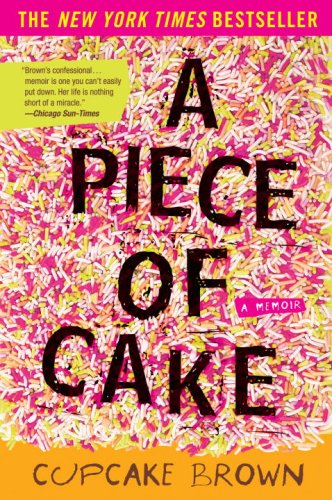
                My favorite non-fiction book is The Glass Castle, by Jeannette Walls. I was captivated by Walls' honesty and the way that she told her incredible story. I google searched 'books like The Glass Castle' in order to find another memoir that told an amazing story through amazing prose. One of the tops hits was A Piece of Cake by Cupcake Brown. One of the first reasons that I want to read this book is because, yes, her real name is Cupcake. How can't a book be great when the author's name is Cupcake? 


                Brown had to overcome countless obstacles in order to become a successful lawyer. Even after just reading the description of the book I am amazed that Brown was able to become a success when there were so many things fighting against her. I am looking forward to reading this book so that I can get a glimpse into the life of Cupcake Brown. Like Brown, I want to be a lawyer. Reading this book will help to motivate me and hopefully teach me that if Brown can become a lawyer, despite the death of her mother, sexual assault, gang history, and drug addiction, so can I.  

Tuesday, November 5, 2013

TOW #8 - IRB - Doing School

            In her book, “Doing School: How We Are Creating a Generation of Stressed Out, Materialistic, and Miseducated Students”, Denise Clark Pope appeals to ethos to show educators that there is something wrong with the education system. In the second half of her book, Pope analyses her interviews and checks up on the five students. She becomes very close to these students and shows just how stressed out, materialistic, and miseducated they are. Pope is the co-founder of Challenge Success, a program that aims to reduce the immense pressure put on students. Her main audience is educators and her goal is to prove that that changes need to be made in schools in order to help students. Although many students read this book, Pope did not focus on them when writing. Pope wants teachers to read this book so that they can reduce the amount of stress put on students and change the course of education for the better.


            Pope plays on teachers’ emotions in order to achieve her purpose. In the first half of her book, Pope follows the lives of five students and shows the immense amount of pressure put on them. She shows how school work affects students at home. Teachers see this stress in students every day in school but Pope goes further, and shows just how deeply school affects kids at home. Teachers cannot follow their own students home but they can follow Roberto, Michelle, Teresa, Eve, and Kevin through their daily struggles. When Pope checks up on these students later, they are still stressed out. Readers connected to the students and their struggles in the beginning of the book, and it hurts to find out that they are still struggling to have personal lives because of their school work. Pope discusses the problems of the school system which readers, especially teachers, are left to ponder. After peeking into the lives of read students, I think that teachers will be more likely to try to change their teaching methods in order to reduce the amount of stress put on their students. 

Sunday, October 27, 2013

TOW #7 - White House Glitches

            In their essay, White House glitches go beyond Obamacare, Edward Luce poses questions for his audience in order to achieve his purpose. Edward Luce is the Washington bureau chief of the Financial Times and writes articles about US politics and economics. The president of the United States often has to handle bad news - this is an inevitable part of the job - but Luce believes that Obama does not like to receive any. White House glitches go beyond Obamacare talks about how Obama faces many problems, not just the technical issues that the Obamacare website faced. Luce argues that the contrast in opinion between Republicans and Democrats pertaining to funding for the ACA, Syria,  the Federal Reserve, etc have caused Obama problems long before his health care website’s near-crash.  Luce writes, “The simple explanation is that Mr Obama’s White House is dominated by a coterie of insiders who have learnt that their boss does not like to hear bad news” (Luce 1). Although his job it to deal with these issues, Luce believes that Obama does not handle bad news well.


Luce poses questions to his audience several times in his essay. Luce writes, “How could Mr. Obama have let things get so out of hand?” (Luce 1). Before going on to answer the question, Luce expands, giving examples of how ‘out of hand’ the White House has become. Luce’s audience is mainly educated adults. When he discusses issues, like Obamacare, he does not go into any detail. He assumes that readers know the opinions of both parties these major issues. I do not think that Luce’s use of questions was effective in achieving his purpose. Posing questions to his audience proves ineffective because his audience is intelligent enough to answer them. When I answered the questions in my head, I came to a much different conclusion than Luce and questioned his credibility. When talking about politics, I believe that personal opinion planes too important of a role; Luce should not have asked his audience questions because he should have known that they would have varying opinions.  

Article:
Luce, Edward. "White House Glitches Go beyond Obamacare." Financial Times.
            N.p., 27 Sept. 2013. Web. 27 Oct. 2013.

            <http://www.ft.com/cms/s/0/6a192e9c-3c9a-11e3-86ef-00144feab7de.html>.

Sunday, October 20, 2013

TOW #6 - Trixie Belden, The Mystery on the Mississippi


            On the back of her novel, Trixie Belden, The Mystery on the Mississippi, Kathryn Kenny appeals to her audience’s emotions in order to sell her book. What is the purpose of the back of a book? In the case of this novel, it was to make customers want to buy it. The average reader of the Trixie Belden series is 8 to 12 years old. (I read the series during the fourth and fifth grade.) At this age, children are not usually buying books for themselves. Therefore, the blurb was designed to appeal to parents looking for books for their children. Like any book cover, The Mystery on the Mississippi contains a blurb about the book. However, this text is not featured at the top of the cover. Instead, the cover features, in bold text,  a paragraph about the revival of Trixie Belden. The text reads, “When the Trixie Belden books appeared over fifty years ago, thousands of readers fell in love with mystery-loving Trixie and her friends. Now the series is in print again, and Trixie is capturing the hearts of a new generation of fans” (Kenny, cover). Kenny appeals to the emotions of her target audience, parents, in order to sell her book. 


            In my opinion (and experience), Kenny’s tactic is successful. The original audience, mentioned in the text above, is now parents looking for books for their children. Reading the blurb about the book brings back childhood memories, memories that they want to share with their children. Seven years ago, this was the case for my mom. When she found the series at a local book store, she was ecstatic to have me read them. Parents love sharing their memories with their children, but children are often reluctant to join the bandwagon. However, by re-printing the books, with new, shiny covers and enhanced artwork, the publishers are creating more modern books that children are more likely to want to read. This tactic, combined with the appeal to pathos on the back cover, helps Kenny to sell her books. 

Not many children want to read
old books, but when disguised in new,
revemped covers, these books are appealing. 

Book: 
Kenny, Kathryn, and Haris Petie. The Mystery on the Mississippi. New York: Random House, 
            2006. Print.

Sunday, October 13, 2013

TOW #5 - Unicef Advertisement

            I believe that Unicef’s advertisement is very successful and definitely achieves its purpose. The advertisement, titled, ‘UNICEF: Slut, Drunk, Dealer’, was created by the Prolam Y&R agency in Chile. There are three variations of the advertisement, each featuring a class portrait. These pictures are taken in bad neighborhoods, and show sad children next to one adult, either a “slut, drunk, or dealer”.  The advertisements were made to persuade people to donate money to Unicef and to raise public awareness. The creator of the advertisements uses pathos, specifically guilt and sadness, to achieve their purpose.


            When people first see the advertisement they are immediately captivated by the tone of the picture. All of the pictures are faded and have a sepia tint. This dark, brown, washed out look makes the pictures and the students look sad and shows the readers the terrible situation of the children pictured. The classes are posed in bad neighborhoods, which makes viewers of the add feel bad for them. Prolam Y&R uses guilt to make people want to donate.


            When viewers start to read the small print on the pictures, they understand the advertisement better. The text reads, "Help us provide quality education to thousands of children in Chile because if we can change their education we can change their destiny. A child who learns is a teacher who teaches.” Each class is standing next to someone who does not have a very good influence on them. The “slut, drunk, and dealer” are positioned to look possessive of the children. When people see the adults and read the caption, they are horrified; most people do not want these types of people to have an influence on children and do not want these people to teach students their ways.  People may be compelled to donate to Unicef because they want these students to be taught by people with good influence, so the students can go on to teach others. Although the advertisements were a little but controversial, I thought they were very effective. They compel people to donate and raise awareness. 


Shi Ying, Loke. "Ads For UNICEF Remind You That Quality Education Can Help Change
            Destinies." Design TAXI. N.p., 4 July 2013. Web. 13 Oct. 2013. 

Sunday, October 6, 2013

TOW #4 - IRB - Doing School

            When writing "Doing School", Denise Clark Pope had many purposes, each directed at a different part of her diverse audience. The majority of Pope’s audience is educators; Pope wants to show these people what school is doing to their star pupils and prove to them that change is needed. She quotes one of her featured students, “People don’t go to school to learn, they go to get good grades which brings them to college, which brings them to the high-paying jobs, which brings them to happiness, so they think,” (Pope 4). This is not what educators want to hear. On the other hand, Pope has a very strong effect on the other half of her audience; students. I believe that one of the purposes that she had in writing this book was to show students that they are not alone in their struggles and that they should change their habits.


            In the book "Doing School", Pope follows five star students from Faircrest High School. She describes the academic, mental, social, and physical struggles of each one and gets the student to really open up. (Personally, I am glad that the author is a woman because she really connected to each student and captured their emotion and her sympathy.)  Pope uses the personal stories and emotions of her featured students to connect with her student audience. These anecdotes allow for any student to find something they connect to and allow for Pope to achieve her purpose. As I read each student’s story I connected to an element from each. Kevin does just enough to get by, just like I find myself doing; Eve stays up until dawn doing homework and makes herself sick in doing so, something I am not proud to admit that I do as well; Michelle complains, “I was always like oh I got to get an A, I… have to do everything, and I just got so overloaded” (Pope 83), just like I do daily. I never knew that other kids felt as pressured and worm-down as I do. It’s a relief, but it’s also terrifying. 

Book:
Pope, Denise Clark. "Doing School": How We Are Creating a Generation of Stressed Out, 
            Materialistic, and Miseducated Students. New Haven, CT: Yale UP, 2001. Print.

Sunday, September 29, 2013

Tow #3 - Can Anything Stop Tesla?

            In his article, Can Anything Stop Tesla?, Paul R. La Monica’s opinionated claims, use of childlike vocabulary, and out of place advertisements prevents him from achieving his purpose. Monica’s article discusses the soaring stock of Tesla Motors. Monica claims that the stock has potential and will continue to rise, despite what analysts have predicted. Shareholders are insured by Monica that they have nothing to worry about; they shouldn’t listen to professional stock analysts and sell, they should keep their stocks and watch their money grow.  Monica’s audience is anyone interested in Tesla Motors or their stock. Monica gives advice both to people who have already purchased the stock and those in the market.


            In my opinion, Monica did not achieve his purpose. While trying to convince people that Tesla Motors is a good investment and that their stock will continue to boom, he failed miserably. Monica was never able to gain credibility. This article is based solely in his opinion, not fact. Throughout the article, Monica compares Tesla to Apple, which could have been an effective parallel. However, he does not use any facts to support his claim; instead he contradicts himself with more opinions. After discussing the similarities of Tesla and Apple’s stock, Monica writes, “of course, developing and selling cars is a lot harder than making software for smartphones” (Monica 3). This claim is extremely objective and I would argue is false. The fourth sentence of the article reads, “The Model S is sleek and has won a gajillion Car of the Year awards in the past few months” (Monica, 1). First off, gajillion is not a word. Second, the Model S has not won a ‘gajillion’ Car of the Year awards. There is one Car of the Year award. Tesla won it: one. Monica does not appealed to ethos at all. When I Googled him, the only thing that I could find was his Twitter feed, which he promoted in his article. I don’t believe a word that Monica says, so his purpose was defeated. Why would I ever take his advice?


Monica, Paul R. La. "Can Anything Stop Tesla?" The Buzz. CNN, 23 Apr. 2013. 
            Web. 29 Sept. 2013. <http://buzz.money.cnn.com/2013/04/23/tesla-stock/>.

Sunday, September 22, 2013

Tow #2 - iPhone 5C

           When you go to Apple.com, the first thing that you see is an advertisement for one of Apple’s newest phones, the iPhone 5C. Although featured, the 5C is not Apple’s most popular model, but second to the 5S. This weekend when I went to the Verizon store (actually, three of them) and the Apple store (two) there was not a single 5S left in stock but there were plenty of 5C’s to go around. Apple knows that the majority of its audience is not interested in purchasing this phone, but the iPhone 5S. In order to captivate these customers, and possibly change their minds, Apple shows off the 5C’s best feature: its color. By showcasing the thing the 5S lacks, Apple can possibly persuade customers to purchase the 5C.


            If you click in the link for more information, you are brought to a beautifully designed page all about the iPhone. The glory of the 5C is its color and what better way to feature this than with large, attention grabbing pictures. The main page of the article is composed of large pictures highlighting the unique and attractive colors of the iPhone. Apple uses as little text as possible and directs readers to subpages where they can find lengthier text with more detail. The text on the page is kept to a minimum and emphasizes the desirability of the color. The advertisement reads, “Color… expresses a feeling. Makes a statement... Reveals your personality” (Apple 2.) This is something the iPhone 5S cannot do.  Apple enhances their pictures by making them interactive. Customers are able to change the color of the iPhone and its cases so they can see just how personal 5C’s can become.


            In my opinion, Apple’s use of images works. I got to play around with the color of an iPhone and create my very own, personalized 5C. The add took my attention away from the phone’s flaws and made me focus on its beautiful color. Apple definitely fulfilled its purpose in making customers reconsider their choice in iPhone models.

"iPhone 5C." Apple. N.p., Sept. 2013. Web. 22 Sept. 2013.

            <http://www.apple.com/iphone-5c>.

Sunday, September 15, 2013

TOW #1 - Student monitoring: Cyberbullying leads Los Angeles-area school district to spy on student’ Facebook, Twitter

            How much privacy do students really have? In Glendale, almost none. Glendale Unified School District in California has a $40,500 contract with Geo Listening, a company that can monitor social media sites. The profiles of Glendale’s 14,000 students are now being tracked.  Last year, two students commit suicide and the school district now plans to do everything possible to prevent future incidents. However, could stalking their students be taking it too far? Erik Ortiz of New York Daily News discusses this issue in his latest article, Student monitoring: Cyberbullying leads Los Angeles-area school district to spy on student’ Facebook, Twitter. Ortiz is the author of many controversial stories, including one titled Catholic leader claims Satan to blame for gay marriage, and Pakistani girl jailed for blasphemy relocates to Canada. The audience of New York Times Daily is diverse and their articles must appeal to a wide variety of people. When talking about controversial issues like religion or privacy, it is important to not come off as too one-sided in order to prevent offending someone. Experienced in this style of writing, Ortiz uses an abundance of quote in his article in order to remain unbiased.
            Ortiz wrote this article to inform people about the controversy that is taking place in Glendale. He wants people to form their own opinion about the online ‘stalking’. By using quotes, I believe that Ortiz achieved his purpose. He supplied his audience with neutral facts about the situation and opinions from people on the left and right of the conflict. Ortiz writes that one opponent of the policy describes the program as “essentially hiring a contractor to stalk the social media of the kids” (Ortiz 2). However, Ortiz illustrates the counter argument by quoting a student at the school, “We all know social media is not a private place,” (Ortiz 1). Both sides of the school district’s policy are balanced out using quotes from both its advocates and challengers.  Ortiz did not write about his own opinion, but about fact. Since there was no bias in his writing, I was able to create my own opinion.


Ortiz, Erik. "Student Monitoring: Cyberbullying Leads Los Angeles-area School District to Spy
            on Students' Facebook, Twitter." New York Daily News. N.p., 15 Sept. 2013. Web.

Marking Period One IRB

            Starting my junior year is scary. I am anticipating a lot more work which in terms means a lot more stress. Throughout my past 11 years in school I have watched as more and more stress was put on me. When I compare my high school experiences to those of my parents, I am curious as to how similar our levels of stress are. My parents don’t seem to understand why I stay up until midnight doing homework and constantly walk around in a terrible mood. Do I really have more on my plate then they did or am I just crazy? (I am guessing it is a little bit of both.) 

            In her novel, Doing School, Denise Clark Pope discusses the struggles of today’s high school students. Grades and success and are becoming more valued than ever and it is taking a toll on the sanity of students. Pope, a former teacher, is a first-hand witness to the compromises that students make.  Doing School How We Are Creating a Generation of Stressed Out, Materialistic, and Miseducated Students follows five high-achieving students throughout their academic struggles. In order to maintain high grades, these students compromise their own moral integrity and resort to lying and cheating. After reading through summaries and reviews of this book, I am afraid of how similar I am to the students discussed in this book. Are the unethical things that I do in order to success, that I consider harmless and necessary, actually my way of cheating? I hope that this book will provide insight on my own academic life and help me understand why I do the things that I do so that I can prevent future mistakes. I want to get the most that I possibly can out of my education without becoming an over-stressed zombie student who simply “does school”. (I also want to prove to my parents that it isn't my fault that I am a stressed out monster most of the time and that they should let me eat a bowl of ice cream and calm down.)
 

Sunday, September 1, 2013

Hospitals Aren't The Best Place After All

     Ken Murray wrote the essay How Doctors Die  in order to convince people to avoid excessive medical treatment but instead to die naturally. Murray had a private medical practice in California for 25 years until his retirement. Murray's essay talks about the over-treatment of patients in hospitals. Because patients are given so many options, they are kept alive for, what Murray considers, too long. The end of their life is miserable and consumed with constant treatments. Murray stopped participating in hospital care for the last ten years of his practice, partly because he was appalled to see medical care administered to patients that caused additional suffering. Murray wants people to choose not to receive life saving surgeries and treatments that will lower their quality of their life but instead die peacefully, just like many doctors. Because doctors see how miserable prolonged treatment can be for patients and their families, many doctors prefer to steer away from excessive medical treatment. Everyone is effected by this essay because no one wants to die a slow and painful death. 

Dying at home was this woman's last wish 
Minnesota Public Radio 

Throughout his essay, Murray uses lots of anecdotes in order to make his argument more personal. Murray talks about Charlie who quit his job and stayed at home where he died peacefully after he was diagnosed with cancer. Jack, one of Murray's patients, asked never to be put on machines. After being admitted to the hospital for a stroke, he was put on life support. Murray writes, “I turned off the life-support machines and sat with him. He died two hours later” (Murray 365). The abundance of examples of real people and real stories that Murray tells reinforces his purpose. Not only does Murray describe people like Jack and Charlie, but people who died miserably in their hospital bed after months of excruciating treatment. Readers do not want to be those unfortunate people, but the ones that die peacefully with their loved ones. In my opinion, Murray's anecdotes contributed to his purpose greatly. The stories that Murray told were like uncovered secrets. It turns out, hospitals aren't the best place to die after all.

Feminism is not Hating Men

      In her essay, Other Women, Francine Prose uses hyperbole in order to strengthen her thesis. Prose was married at a very early age to a man she no longer loved. In 1972, she joined a feminist group. During this era, feminism was a growing topic; many women were passionate about equal rights and justice. Prose joined the group for support through her failing marriage. She never really fit in with the women in her group; instead, she felt as if she was back in high school, sitting in the corner. Luckily, Prose's life turned around. The novel that she had been secretly writing for years was going to be published so she decided to leave her husband and move to San Francisco. However, a year later when Prose returned to collect some things she left behind, she discovered that her husband had slept with all of the women in her feminist group. Prose admits, “In fact, this was not how it happened. In fact, I’m pretty sure that my husband only slept with two of the women in the group. I don’t know why I tell this story... the way I do. Obviously, saying all the women in the group makes a better story than saying two of the women in the group” (Prose 374). 
Prose wrote this book in order to teach other women how important it is to believe in yourself . In my opinion, her use of exaggeration helped have a stronger effect on her readers. Prose writes, “By all those women, [I] meant two women. For me to claim that he slept with them all is not only untrue but also unfair... It’s the sort of embellishment that shines light on some deeper truth... of a long-ago skirmish in the ongoing, counterproductive war of men against women” (Prose 378). Prose's husband gave her reason for war but she knew that hating him would not have gotten her anywhere. However, her feminist views and self empowerment allowed her to start a new, successful life. She learned feminism is not about hating men but loving yourself. 

Being a feminist doesn't mean you hate men 
Everyday Feminism 

The Dangers of Being a Childhood Prodigy

      In his essay, Vanishing Act, Paul Collins uses parallelism in order to show the dangers of being a child prodigy. Collins is a writer, specializing in history and memoir, and an associate professor of English at Portland State University. In this essay, he focuses on the life of Barbara Follett. At the age of 8 she started her first novel, which she published at the age of 12. Her books were loved by many and given high praises by the press. However, Barbara's life did not continue on this upwards path. Barbara's father left her and her mother alone, and with little money. Barbara took a secretarial job and eloped with a man who cheated on her. She stopped writing and eventually left her husband and disappeared for good. Collins write this essay in order to highlight the risks of being a child prodigy. Anyone interested in harmful effects that fame can have on a child will be enthralled with this piece.  
      In order to strengthen the effect that his essay had on his readers, Collins used parallelism. Instead of solely relying on Follett as an example for the downfalls of childhood fame, he compares her experiences to those of several other childhood prodigies. Zerah Colburn was a math genius at the age of 5, admired by audiences including John Quincy Adams. However, after his father died and left him alone and without money, quite similar to Barbara, Collins writes, “Zerah Colburn... also disappeared—so thoroughly that he couldn't reappear even when he wanted to” (Collins 137). Bobby Fischer was a chess prodigy as a child. He, too, went down in flames. Collins describes, “Bobby Fischer [was] left by his mother at seventeen to essentially fend for himself, and while that may not have created his famed eccentricity, it hardly helped” (Collins 136). In my opinion, Collins use of parallelism between Barbara's fate and the fate of several other child prodigies enhanced his ability to show the dangers of fame as a child. It helped him achieve his purpose. 

Fame Too Soon? 
The WINA News

Death Doesn't Have to be Scary

      In his essay, The Good Short Life, Dudley Clendinen's straight forward and honest approach taught readers that death does not have to be a scary thing. At sixty-six, Clendinen was diagnosed with ALS, commonly known as Lou Gehrig's disease. His doctors told him that he did not have much time left to live. Initially, Clendinen was scared; he did not know what he was supposed to do. However, it did not take Clendinen long to realize what his plan should be and what he wanted to do with the rest of his life. Clendinen wrote, “this is not about one particular disease or even about Death. It’s about Life, when you know there’s not much left. That is the weird blessing of Lou [Gehrig's disease]. There is no escape, and nothing much to do. It’s liberating” (Clendinen 120). After watching his mother and aunts in the last months of their lives, Clendinen realized that he did not want to finish his life dependent on machines; he wanted to be there for his daughter and enjoy the last few drops of his life.  He explains, “I’d rather die. I respect the wishes of people who want to live as long as they can. But I would like the same respect for those of us who decide—rationally—not to” (Clendinen 121). 
      Suicide is taboo. However, physician assisted suicide is at an all time high, according to Life Line News. Four states have legalized assisted suicide and all of them are seeing an upward trend. Clendinen wrote this essay in order to explain why people dying of terminal illnesses choose not to live. He wrote this both for suicide skeptics and other patients looking for a way out of their impending deaths. I believe that Clendinen's honesty about his decision had a profound effect on his audience. He was straight to the point and explained rationally why he would rather die then suffer and cause his family a prolonged goodbye and significant debt. Clendinen's death taught his audience that death doesn't have to be scary.

Assisted Death Is On A Rise 
Massachusetts Institute of Technology 

Happiness over Vanity

     In her essay, Killing My Body to Save My Mind, Lauren Slater used imagery in order to show the importance of living your life happily. Slater used to be a prime example of a fit woman: she was 5 feet tall, 100 pounds, and had an exceptional family history of health. However, Slater was not thrilled about the prospect of living a long life. Her depression crippled her. Slater described, “at night, the darkness was intense, all-consuming, like liquid coal” (Slater 396). She was miserable, until her doctor prescribed Zyprexa. Slater recalled, “three pills and three days later, my depression lifted, just lifted like a wet velvet curtain, heavy and dripping and hauled up high above me” (398). Zyprexa, however, was not the perfect cure; it has one terrible side effect. Within months of starting the prescription, Slater gained 80 pounds that she could not lose. Slater's doctors told her that she would most likely develop diabetes and live a shortened life. In Slater's opinion, it was worth it. She would rather enjoy every possible moment with her family until she is 75 then live until to be 100 surrounded by depression. 


That's One Happy ScaleThe Peak

      Slater wrote this essay in order to push her readers to live the happiest life possible. Her diverse audience, whether it be other patients suffering from psychosis or anyone who has to make a decision between vanity and happiness, are told that your mind is more important than your body. Slater uses extremely descriptive imagery throughout her essay. In my opinion, this imagery is very effective at supporting Slater's purpose. When Slater graphically describes her depression, the reader feels sympathetic. As Slater's depression is lifted, it doesn't matter that more weight is gained because her life is happy. The words that she uses and the moments that she describes are filled with joy. The readers focus on the happiness in Slater's life and not her weight, just like Staler herself does in reality. Her imagery shows the importance of a happy, fulfilled life.