Sunday, November 24, 2013

TOW #10 - Moms Demand Action Advertisement

            Moms Demand Action is a group demanding gun sense in America. In their latest line of advertisements they compared banned items, in the United States to gun laws. The advertisements each pictured two children; one holding a gun and the other holding a harmless banned item like a dodge ball, Kinder surprise egg, or copy of Little Red Riding Hood. These advertisements ask why these items are banned in order to promote child safety if assault rifles are still legal. The main audience of this advertisement is parents. I focused on the advertisement featuring Kinder surprise eggs, simply because I stumbled upon it first, but all of the pictures use the same basic elements. In order to capture the attention of parents and gain their support, Moms Demand Action uses dark colors and surprising facts.


             The dark colors in the advertisement make the picture look scary and draws readers attention to the children. Since the background is dark and scary, the children look as if they are in danger. Since the children are highlighted with bright colors, they are the focus of the picture; readers are drawn to them. Parents do not want to see any child put in danger. The contrasting colors in this advertisement appeal to parents emotions and invest them in the ad.


            The advertisement uses surprising facts in order to shock parents and make them want to help Moms Demand Action. Now that readers are drawn in they are probably going to read the text featured on the ad. The text asks, “One child is holding something that’s been banned in America to protect them. Guess which one.” Most people would assume that guns are banned, not chocolate, but they are wrong. The ad explains that “We won’t sell Kinder chocolate eggs in the interest of child safety. Why not assault weapons?” This surprising fact shocks parents, making them concerned for their children’s safety, and makes them want to support gun sense in America. I think that these advertisements were very effective in appealing to emotion in order to capture attention and gain support. 


Sunday, November 17, 2013

TOW #9 - Philippines typhoon disaster: Caring for the living, tending to the dead

            Last week, super typhoon Haiyan causes disaster in the Philippines. The official death count is 3,681 and rising. Michael Martinez, Jethro Mullen, and Ben Brumfield collaborated on an article for CNN titled “Philippines typhoon disaster: Caring for the living, tending to the dead” that was posted today. The article talks about the international aid efforts and the process for identifying corpses. This terrible disaster has caused a lot of damage; reviving the country will be hard and expensive work. I believe that the author’s purpose in writing this article is to make readers feel sympathetic towards the Philippines so that they will be more inclined to help and donate. Martinez, Mullen, and Brumfield use strong diction in order to appeal to pathos and achieve their purpose.
A man looks over the devastation from his damaged home in Tacloban on November 17.
             The strong, sad words that the authors choose to use make the readers feel sympathetic towards people in the Philippines. Martinez, Mullen, and Brumfield use emotional words in order to describe post-typhoon Philippine. They write, “Desperation grew among Filipinos who've been without electricity or shelter for more than a week since Super Typhoon Haiyan reduced homes to splinters” (Martinez, Mullen, & Brumfield 1). The Philippines are described as desperate and homes are not just destroyed, but reduced to splinters. They continued, “The toll remains overwhelming with thousands dead, about 3 million people displaced, vast communities flattened and looting and violence erupting in Tacloban” (Martinez, Mullen, & Brumfield 1). An overwhelming number of people died, vast communities were not just destroyed but flattened, and violence erupted. The authors make it clear that people in the Philippines are suffering. Unlike most news articles, this article does not take a straight-forward, fact-driven approach. Instead, the authors appeal to reader’s emotions in order to make them feel bad for the people in the Philippines and want to donate. I think that the authors were successful. The words that they used to describe the disaster and aftermath made it seem terrible and depressing, like it truly is. I hope that people are as effected as I am by their diction and donate. 

Article:
Martinez, Michael, Jethro Mullen, and Ben Brumfield. "Philippines Typhoon Disaster: Caring
     for the Living, Tending to the Dead." CNN. Cable News Network, 17 Nov. 2013. Web.

Marking Period Two IRB

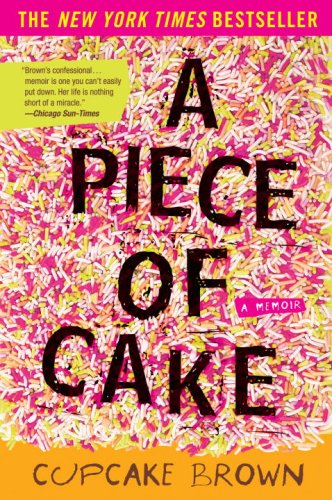
                My favorite non-fiction book is The Glass Castle, by Jeannette Walls. I was captivated by Walls' honesty and the way that she told her incredible story. I google searched 'books like The Glass Castle' in order to find another memoir that told an amazing story through amazing prose. One of the tops hits was A Piece of Cake by Cupcake Brown. One of the first reasons that I want to read this book is because, yes, her real name is Cupcake. How can't a book be great when the author's name is Cupcake? 


                Brown had to overcome countless obstacles in order to become a successful lawyer. Even after just reading the description of the book I am amazed that Brown was able to become a success when there were so many things fighting against her. I am looking forward to reading this book so that I can get a glimpse into the life of Cupcake Brown. Like Brown, I want to be a lawyer. Reading this book will help to motivate me and hopefully teach me that if Brown can become a lawyer, despite the death of her mother, sexual assault, gang history, and drug addiction, so can I.  

Tuesday, November 5, 2013

TOW #8 - IRB - Doing School

            In her book, “Doing School: How We Are Creating a Generation of Stressed Out, Materialistic, and Miseducated Students”, Denise Clark Pope appeals to ethos to show educators that there is something wrong with the education system. In the second half of her book, Pope analyses her interviews and checks up on the five students. She becomes very close to these students and shows just how stressed out, materialistic, and miseducated they are. Pope is the co-founder of Challenge Success, a program that aims to reduce the immense pressure put on students. Her main audience is educators and her goal is to prove that that changes need to be made in schools in order to help students. Although many students read this book, Pope did not focus on them when writing. Pope wants teachers to read this book so that they can reduce the amount of stress put on students and change the course of education for the better.


            Pope plays on teachers’ emotions in order to achieve her purpose. In the first half of her book, Pope follows the lives of five students and shows the immense amount of pressure put on them. She shows how school work affects students at home. Teachers see this stress in students every day in school but Pope goes further, and shows just how deeply school affects kids at home. Teachers cannot follow their own students home but they can follow Roberto, Michelle, Teresa, Eve, and Kevin through their daily struggles. When Pope checks up on these students later, they are still stressed out. Readers connected to the students and their struggles in the beginning of the book, and it hurts to find out that they are still struggling to have personal lives because of their school work. Pope discusses the problems of the school system which readers, especially teachers, are left to ponder. After peeking into the lives of read students, I think that teachers will be more likely to try to change their teaching methods in order to reduce the amount of stress put on their students.